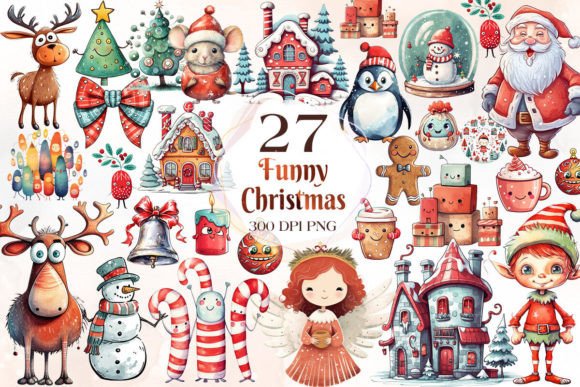
Reviewing Funny Hand Drawn Christmas Clipart for Stitching
As a designer who spends half my life staring at digitized paths and the other half pulling threads out of bobbin cases, I have learned that not every cute graphic translates well to fabric. We often fall in love with a visual on screen, only to watch it turn into a puckered mess once the needle hits the hoop. This season, I took a close look at the Funny Hand Drawn Christmas Clipart collection to see if these whimsical illustrations hold up under the pressure of a real embroidery project. My goal was not just to admire the art, but to determine if it is viable for commercial use, client gifts, and small shop inventory.
First Impressions: Charm Meets Practicality
The immediate appeal of this Illustrations set is its organic, imperfect line work. In a market saturated with vector-perfect, sterile holiday graphics, the hand-drawn aesthetic offers a warmth that feels authentic. For an embroidery designer, this is a double-edged sword. Organic lines can be tricky to digitize because they lack the geometric predictability of standard fonts or shapes. However, when reviewing these files, I noticed that the simplicity of the drawings works in their favor. The lack of excessive detail means fewer stitch changes and a cleaner finish on the final product.
The mood is playful and nostalgic. It does not scream "commercial holiday overload"; instead, it whispers "cozy winter morning." This subtle emotional cue is crucial for sellers. When a customer sees a design, they are buying the feeling it evokes. These designs evoke comfort, making them ideal for items meant to be touched and held, like blankets and apparel.
Real-World Application: The Tote Bag Test
To truly evaluate the Funny Hand Drawn Christmas Clipart, I moved beyond digital mockups and into the studio. I selected a natural canvas tote bag for my test run. Canvas is a forgiving yet textured fabric that reveals the truth about stitch density and thread tension. I chose one of the simpler character designs from the set, aiming for a central placement that would serve as a focal point without overwhelming the bag’s utility.
The stitching process revealed the importance of proper stabilization. Because the lines are hand-drawn, they vary in thickness. If you are digitizing these yourself or using pre-digitized files, you must ensure that the thinner lines do not get lost in the fabric texture. I used a medium-weight cut-away stabilizer to prevent pull-out, which is common with woven canvases. The result was crisp. The satin stitches followed the organic curves smoothly, and the fill areas remained flat without excessive buildup. This success suggests that these designs are highly suitable for tote bag design projects where durability and visual clarity are paramount.
Apparel and Custom Gifts
Beyond totes, I considered how these images would perform on custom apparel. A sweatshirt is a classic holiday gift item, but the fleece fabric presents challenges. Thick fabrics can swallow small details. I found that the bolder elements of the Funny Hand Drawn Christmas Clipart worked beautifully on a cotton-blend hoodie. The contrast between the bright thread colors and the heather gray fabric made the design pop. However, I would advise caution with the more intricate pieces in the collection. On stretchy or textured fabrics like fleece, tiny details may blur. For sweatshirt embroidery, scaling up the design slightly and simplifying the stitch path can ensure the image remains recognizable after washing.
For baby embroidery, such as onesies or burp cloths, the softness of the design is a major selling point. Parents appreciate gentle, non-aggressive imagery. Yet, safety and comfort are key. High stitch density can create stiff patches that irritate sensitive skin. When using these designs for infant items, I recommend using a soft backing and ensuring the thread quality is premium and hypoallergenic. The whimsical nature of the clipart fits perfectly here, adding a personalized touch to a personalized gift that feels handmade with care.
Navigating Technical Challenges
While the aesthetic is strong, practical execution requires attention to detail. Not every surface is friendly to hand-drawn styles. Curved surfaces, such as caps, demand precise digitizing. If the embroidery file has too much pull, the design will distort on the curved panel of a hat. I recommend testing these designs on scrap fabric that mimics your final product before committing to a full production run. Check the stitch density carefully. If the digital file relies heavily on dense fill stitches, it may pucker thin fabrics like tea towels or silk blends.
Dark fabrics present another hurdle. Hand-drawn designs often rely on negative space or fine lines. On black or navy fabric, you may need to add an underlay or use a lighter thread color to ensure visibility. Always test your thread colors against your fabric choice. A design that looks vibrant on white might disappear on dark green velvet. Using a printable mockup can help visualize color combinations, but nothing replaces a physical stitch-out.
Commercial Value and Brand Consistency
For Etsy sellers and small business owners, the uniqueness of your product drives sales. The Funny Hand Drawn Christmas Clipart offers a distinct visual identity that separates your small shop product from mass-produced alternatives. Customers are increasingly seeking authentic, handmade items. By incorporating these unique illustrations into your holiday embroidery lineup, you signal quality and creativity. This builds trust and encourages repeat business.
However, professionalism is key. Ensure that your finishing is impeccable. Trim jump threads, press the finished item, and package it thoughtfully. The design is only part of the equation; the presentation completes the experience. Whether you are creating an embroidered patch for a boutique brand or a custom apron for a local cafe, the consistency of your stitch quality reflects directly on your brand.
Designer Notes for Best Results
- Test on Scrap Fabric: Always run a test stitch-out on the actual material you plan to use. This reveals issues with tension and density before you ruin good fabric.
- Check Licensing: Before selling finished items or digital products, confirm the license terms. Ensure you have commercial rights for the digital embroidery file or clipart usage.
- Stabilizer Selection: Match your stabilizer to your fabric. Cut-away for knits and stretchy materials, tear-away for stable wovens.
- Hoop Size Matters: Ensure your design fits comfortably within your hoop size without hitting the edges. Leave enough margin for proper hooping.
- Contrast is Key: Choose thread colors that contrast sufficiently with the fabric to maintain the integrity of the hand-drawn lines.
In conclusion, the Funny Hand Drawn Christmas Clipart is a versatile and charming addition to any designer’s toolkit. It bridges the gap between digital art and tactile craft, offering a warm, human touch that resonates with today’s consumers. With careful attention to technical details like stitch density, fabric choice, and stabilization, these designs can elevate your embroidery project from simple decoration to a cherished keepsake. Whether you are a hobbyist making gifts for family or a professional managing a craft business, these illustrations provide a solid foundation for creative and commercially viable holiday products.